

Keep crawl space humidity below 60 percent. That’s the EPA’s ceiling for humidity inside a home, and it’s a good target under the house too. Above it, mold and wood decay get a foothold, and termites and other moisture-loving pests move in. In Eastern North Carolina, a vented crawl space often runs well above that from spring into fall.
Every home inspection we do covers the crawl space, so we see a lot of them. Here’s why it happens, how to tell if yours is too damp and what actually brings it down.
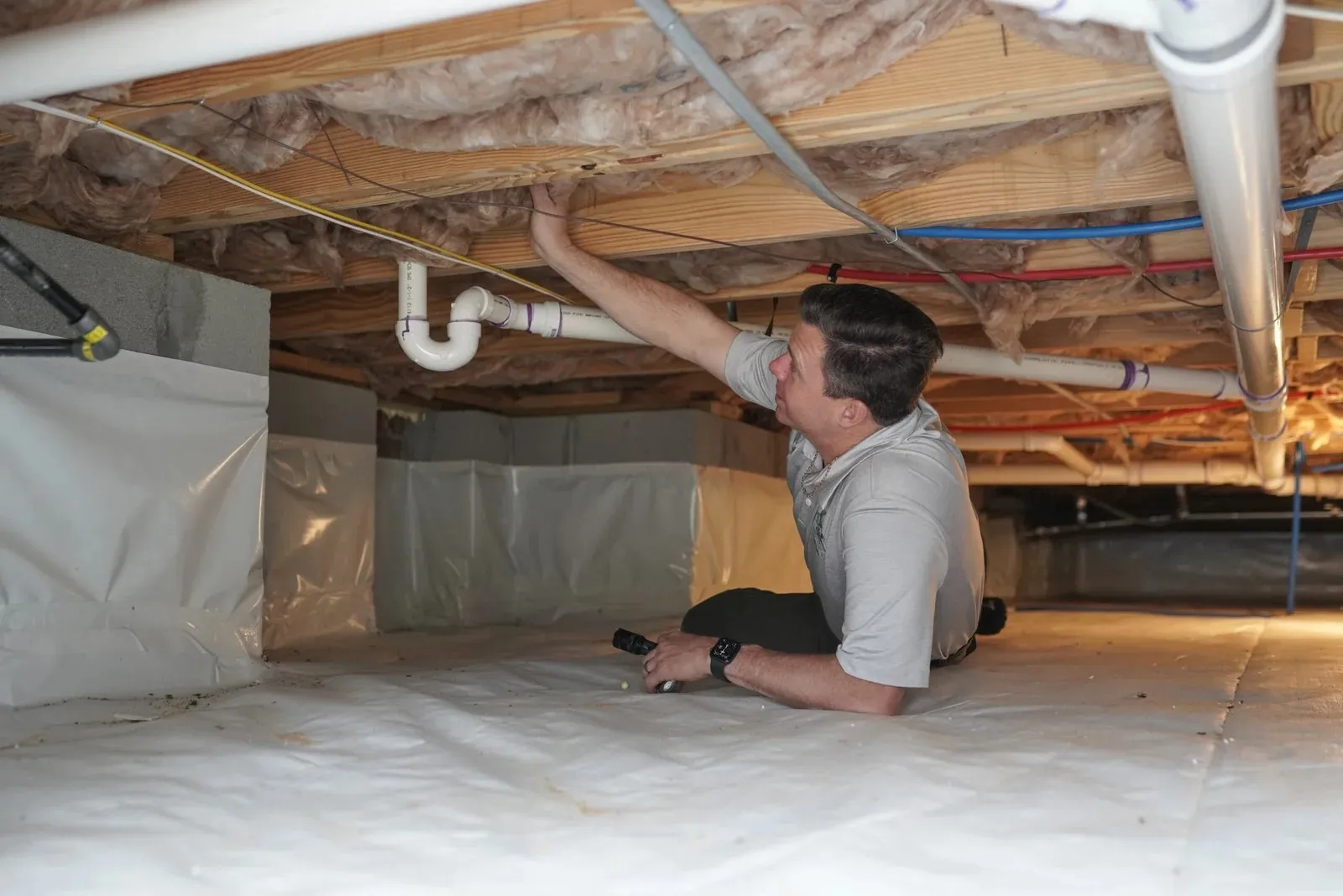
Why crawl spaces here run so damp
For decades, the rule was to vent crawl spaces so they could “breathe.” In our climate, that often makes things worse. Advanced Energy, a building science group in Raleigh, studied vented and closed crawl spaces in North Carolina homes and found the vented ones were moisture traps, with relative humidity routinely over 70 percent from early spring to late fall and over 90 percent in the summer. The closed crawl spaces in the same study stayed much drier.
Here’s what’s going on:
- Humid air comes in through the vents. On a muggy summer day, warm outside air flows under the house and meets cooler surfaces like the ground, the ductwork and the floor framing. As it cools, the humidity climbs, and water can condense right on the wood and ducts.
- Moisture rises from the ground. Bare soil or a torn, patchy vapor barrier lets ground moisture into the crawl space air all year.
- Rain drains toward the house. Gutters that overflow, downspouts that empty at the foundation and soil that slopes the wrong way send water under the house after every storm.
- Things leak and sweat. Plumbing leaks, a clogged AC condensate line and sweating ductwork add water you might never see from upstairs.
Signs your crawl space has too much moisture
You don’t always have to go under the house to know. Watch for these.
Inside the house
- A musty smell, especially in rooms over the crawl space
- Wood floors that cup or feel soft
- A house that feels clammy even with the AC running
In the crawl space
- Standing water or wet soil, especially after a storm
- A missing, torn or bunched-up vapor barrier
- Insulation sagging or lying on the ground
- Water dripping from ductwork, or ducts that look wet
- Rusty nails, straps and hangers
- Mold or dark staining on the joists and subfloor
- Termite mud tubes on the piers or foundation walls
A cheap digital hygrometer set in the crawl space for a week in summer will tell you a lot. If it keeps reading in the 70s and 80s, the crawl space needs help.
What too much moisture does
- Mold and mildew on the framing and subfloor.
- Wood decay. Wood that stays damp for months starts to rot, and that’s when floors start to sag.
- Termites and other pests. Subterranean termites need moisture, and a damp crawl space is about as inviting as it gets. Roaches, silverfish and other pests that need moisture follow too.
- A damp, musty house. Some crawl space air makes its way into the living space, so a wet crawl space can make the whole house feel muggy.
- Higher energy bills. Advanced Energy found that properly closed crawl spaces significantly reduced the energy used to heat and cool the house in North Carolina’s humid climate.
How to lower crawl space humidity
Start outside and work your way in. Each step makes the next one work better.
1. Keep rainwater away from the foundation
Clean your gutters at least twice a year, and more often under pines and oaks. Add downspout extensions or buried drain pipe so the water lands several feet from the house. The ground next to the house should slope away from it, and a common target is about six inches of drop over the first ten feet. Keep mulch and soil pulled back from the siding.
If a part of the yard stays soggy no matter what, a swale or French drain can carry the water away. Call NC811 before you dig so the utility lines get marked. It’s free.
2. Cover the ground
A vapor barrier is a plastic liner over the crawl space floor that stops ground moisture from rising into the wood above. If yours is missing, torn or bunched up in a corner, it’s not doing its job.
3. Fix the leaks and the sweating
Repair plumbing leaks, clear the AC condensate line and have sweating ductwork looked at. These are often small fixes that take a lot of water out of the crawl space.
4. Get the venting right
In a vented crawl space, foundation vents need to be open and working to move damp air out. But in a humid summer, venting alone often can’t keep up, and that’s where a closed crawl space comes in.
5. Consider encapsulation with a dehumidifier
Encapsulation seals the crawl space with a heavy-duty liner over the floor and up the walls, closes off the foundation vents and adds a dehumidifier to hold the humidity down. Once it’s sealed, outside air and ground moisture stay out, and the dehumidifier handles the rest. It protects the wood under your home and helps with energy efficiency.
6. Pump out standing water
If water collects in the crawl space after storms even with good gutters and grading, a sump pump can collect it and move it out. A tight, custom-fit crawl space door helps keep outside air and water where they belong.
How we check a crawl space
Every home inspection we do covers the crawl space, and we check for moisture with a meter and infrared scanning at no extra cost. If your crawl space needs work, our crawl space moisture control includes vapor barriers, foundation venting, encapsulation with a dehumidifier, sump pumps and crawl space doors. Every crawl space is different, so we look at yours first and then give you a clear, upfront quote.
Worried that moisture has already invited termites? Our termite inspections are free, and we treat the crawl space on every pest control visit.